


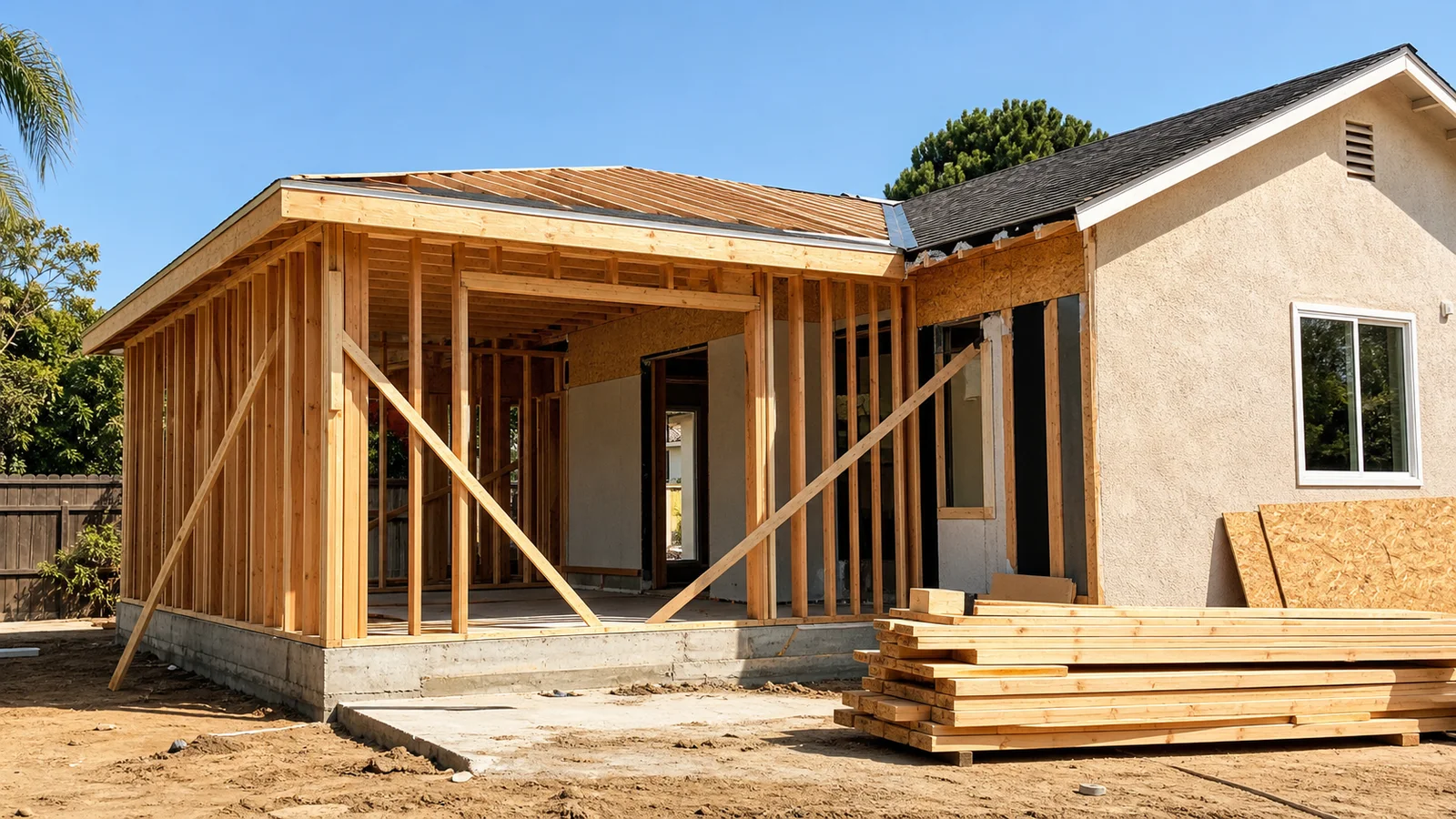
A home addition is not just extra square footage. The best additions feel like they belong to the original house. That takes planning around structure, rooflines, floor levels, utilities, natural light, circulation, exterior materials, and how the family will use the space every day.
Useful Official Sources
Related Kimmel Pages
Design the Addition Around the Existing House
The addition should solve a real family need: bedroom space, a larger kitchen, a family room, a parent suite, a garage, or flexible work space. Once the need is clear, the layout has to connect to the existing home without awkward transitions.
Look at traffic flow, doorways, privacy, natural light, ceiling height, flooring transitions, and where the addition changes the exterior shape of the house.
Structure and Rooflines Matter
Additions often require foundation, framing, shear, roof, drainage, and exterior envelope planning. The roof tie-in is especially important because a poor transition can create water problems or make the addition look visibly tacked on.
This is where early coordination with design and engineering professionals can prevent expensive changes after plans are underway.
Utilities Can Shape the Budget
Added rooms may need electrical, HVAC, plumbing, insulation, windows, doors, and energy compliance work. A bedroom addition is different from a bath addition. A garage addition is different from a conditioned family room.
Before comparing bids, homeowners should understand what utility scope is included and what remains an allowance, assumption, or separate trade item.
Plan for Family Life During Construction
An addition can be less disruptive than a kitchen remodel if the work is mostly outside the living area, but tie-in phases can still affect daily routines. Dust protection, access, parking, noise, and work-zone boundaries should be discussed up front.
Owner-led communication helps because decisions often happen at transitions: where old meets new, where utilities connect, and where finishes need to match.
Early Questions
- What existing walls, rooflines, or foundations are affected?
- Will the addition require plans, engineering, or energy documentation?
- How will the new space connect to daily family use?
- What finishes need to match the existing house?
- When will the interior of the home be opened to the work area?
Additions Are Tie-In Projects
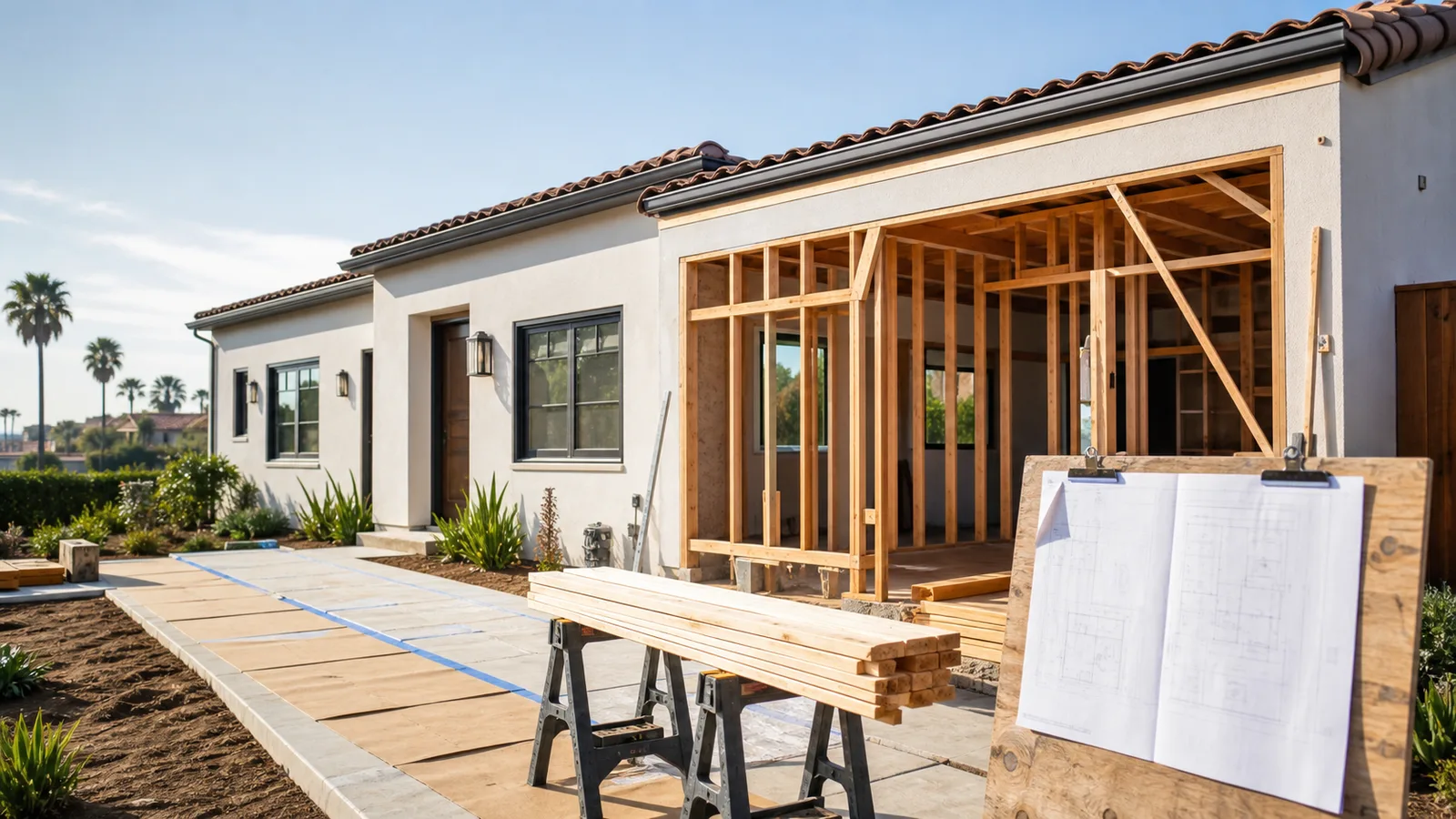
A room addition is not just new square footage. It is a series of tie-ins to the existing structure: foundation, framing, roof, drainage, windows, doors, electrical, HVAC, exterior finishes, interior flooring, and sometimes plumbing. The transition between old and new is where planning quality shows.
This is why additions should be scoped with more care than a single-room cosmetic remodel. The project may need design documents, engineering, energy documentation, inspections, and a schedule that protects the part of the property still being used.
Occupied Homes Need Phasing
Many families stay in the home while addition work is underway. That can be practical, but only if the project is phased around access, dust, temporary barriers, utilities, noise, parking, and safe paths. The plan should be realistic about when the existing home will be opened to the new work.
Commercial properties have similar phasing questions. If a business remains open, the GC needs to think about customer paths, employee access, deliveries, signage, and work that may need to happen outside normal hours.
Good Addition Planning Produces Better Estimates
- Clarify whether the addition changes load-bearing walls, rooflines, or foundations.
- Identify utility extensions and panel/HVAC capacity questions.
- Discuss exterior finish matching, drainage, and window/door placement.
- Separate owner selections from construction allowances.
- Document hidden-condition assumptions before demolition.
Clarify the home addition Scope Before Pricing
A home addition has to connect new square footage to the existing structure without creating a house that feels patched together. Before a price can mean much, the owner and contractor need the same definition of the work: the reason for the added space, how the addition ties into the existing roof and foundation, whether bedrooms, bathrooms, or utilities are changing, how the family will live through construction, and which city or county office reviews the work. That scope conversation is what turns a general idea into a buildable plan. It also keeps the estimate from becoming a loose collection of assumptions that are difficult to compare against another bid.
For Kimmel Elite, a useful first walkthrough connects the property goal to the actual construction path. The owner should leave with a clear sense of what can be priced from the walkthrough, what may need drawings or trade input, and what should be confirmed through San Diego service area. That is true for home addition planning, related repairs, and larger work that touches several building systems.
Use Public Requirements as Planning Inputs
Public rules do not replace contractor judgment, and contractor guidance does not replace the authority having jurisdiction. A practical plan uses both. For this kind of work, useful starting points can include City of San Diego Building Permit information, County of San Diego Planning and Development Services, and California 2025 Building Energy Efficiency Standards. These references help owners understand why a scope may need permit review, documentation, inspections, energy-code planning, accessibility review, or a more careful sequence than a quick cosmetic project.
The goal is not to make the owner manage the permit process alone. It is to keep the conversation grounded. When an estimate explains which requirements are known, which ones need confirmation, and who is responsible for the next step, the project is easier to schedule and easier to defend if questions come up during review, inspection, financing, insurance, resale, or tenant coordination.
Separate Residential and Commercial Expectations
For a household, an addition has to solve real daily pressure: bedrooms, multigenerational space, office needs, storage, circulation, natural light, and a layout that still works after the project is complete. The best construction plan recognizes that family life continues during many remodels. Work areas, protection, temporary access, selections, schedule updates, and cleanup all affect how the project feels while it is underway.
For a commercial property, added or reworked space can affect occupancy, accessibility, parking, restrooms, utilities, fire/life-safety coordination, tenant disruption, and whether the business can stay open during construction. Many projects need a licensed GC who can coordinate both residential and commercial scopes, not only a finish installer. The value is practical coordination: knowing which trades are involved, how the work affects occupied space, and where sequencing decisions can reduce unnecessary disruption.
Estimate Details That Prevent Confusion
A stronger estimate for a home addition should spell out foundation assumptions, framing, roof tie-ins, window and door openings, insulation, electrical and HVAC routing, drywall, exterior finishes, permits, engineering, inspections, and site access. If those items are missing, the owner may be comparing a complete scope against a thin number. That is how a lower bid can become more expensive after construction starts.
Before signing, compare the scope against questions to ask before signing a contractor estimate. If the work has unknowns, also decide how discoveries will be handled through construction change-order planning. Clear estimate language does not eliminate every surprise, but it gives both sides a fair process for deciding what is included, what is excluded, and what requires written approval.
- What exactly is included in the base scope?
- What is excluded or listed as owner responsibility?
- Which allowances can change after selections are made?
- Which hidden conditions are reasonably possible for this property?
- How will photos, pricing, and approval be handled if the scope changes?
Sequence the Work Before the First Day On Site
Good scheduling is not only a start date and an estimated finish date. For this scope, sequencing usually includes design review, engineering, permitting, site preparation, foundation work, framing, rough trades, inspections, insulation, drywall, exterior closure, finishes, and final corrections. Each step affects the next one, especially when inspections, material lead times, utility shutoffs, tenant access, or occupied-home logistics are involved.
Related planning guides can help owners think through the moving parts before work begins: San Diego County permit planning and Title 24 energy-code planning. Reading across those topics is useful because real projects rarely stay in one category. A bathroom may involve electrical and ventilation. Exterior repair may involve drainage. An ADU may involve structure, utilities, energy code, and parking.
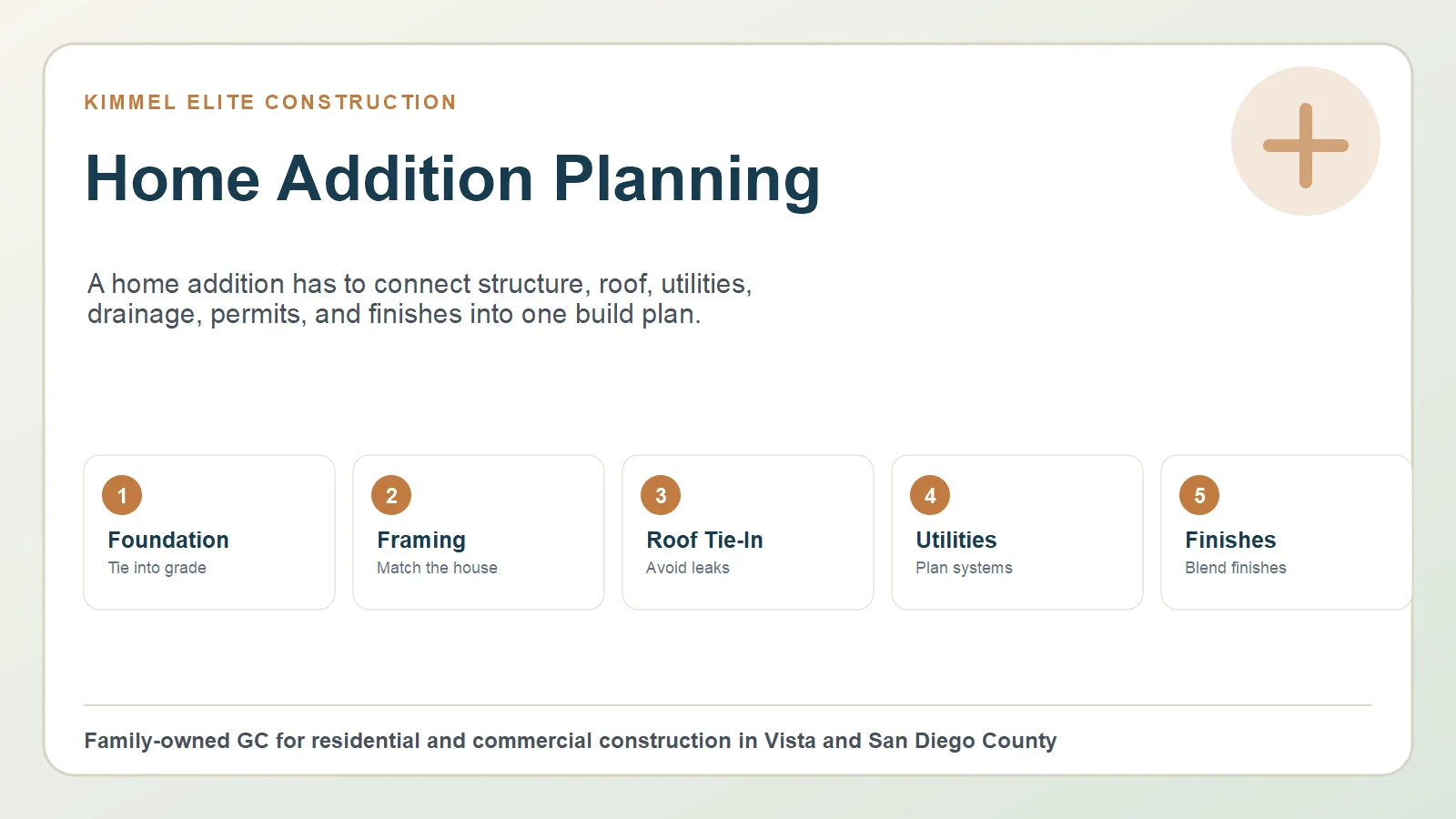
A Practical Checklist Before You Approve the Work
Use the checklist below as a final pass before approving the scope. It is not paperwork for its own sake. It is the simplest way to catch vague assumptions while changes are still easy to make, before demolition, ordering, inspections, or business disruption create pressure.
The same checklist works for homeowners, property managers, and commercial owners because the core issue is the same: everyone needs a shared written understanding of the work, the schedule, the risk areas, and the communication process.
- Decide whether the addition is solving space, privacy, resale, accessibility, or work-from-home needs.
- Ask how the new roofline, foundation, drainage, and exterior finishes will meet the existing home.
- Clarify whether an engineer, designer, or architect is needed before pricing is final.
- Plan family access, temporary barriers, utilities, and work hours before framing starts.
- Budget for tie-in details that are easy to miss in a square-foot estimate.
When an Owner-Led GC Adds the Most Value
An owner-led, family-owned GC is most useful when the project touches several decisions at once: layout, trades, permits, materials, access, schedule, protection, and budget. That is when a single point of accountability matters. The owner should not have to connect every trade conversation, permit question, product decision, and schedule adjustment alone.
For a project that may involve home addition planning and commercial construction and improvements, the next step is a direct walkthrough and a written scope. Kimmel Elite can help owners decide what belongs in the first phase, what needs more investigation, and what can wait until a later improvement window. Start with a free estimate request when the goal is clear enough to discuss on site.
Common Questions
Why do additions need more planning than interior remodels?
They affect structure, exterior envelope, rooflines, drainage, utilities, and permitting. Those details influence both cost and long-term performance.
Can an addition be phased while the family stays home?
Often yes, but the tie-in phases need careful planning because they may open the existing home to the work zone.
Considering an addition? Ask for a walkthrough focused on fit, scope, and likely permit requirements.
Kimmel Elite Construction keeps the conversation practical: what you want to build, what the property needs, what the city may require, and how the work can be coordinated around the home, tenant space, or commercial property.
Request a Free EstimateRelated Guides
Permits
Do You Need a Permit for a Remodel in San Diego County?
Learn when remodel work is likely to need permit review, why each city can differ, and how early planning protects budget and schedule.
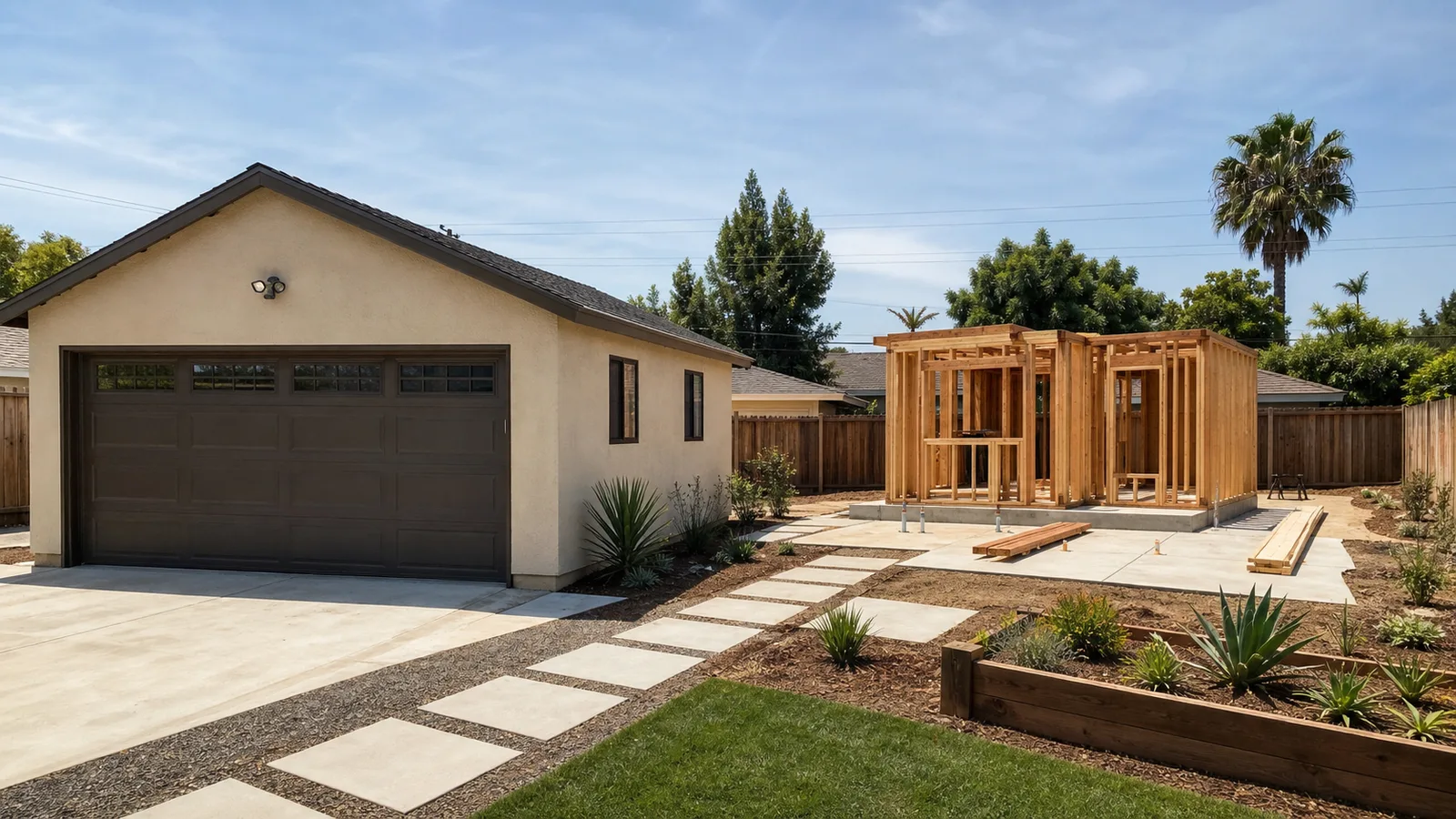
ADUs & Garage Conversions
Garage Conversion vs. Detached ADU in San Diego County
Compare garage conversions and ADUs through the practical lens of family use, utilities, budget, permits, privacy, and long-term flexibility.