


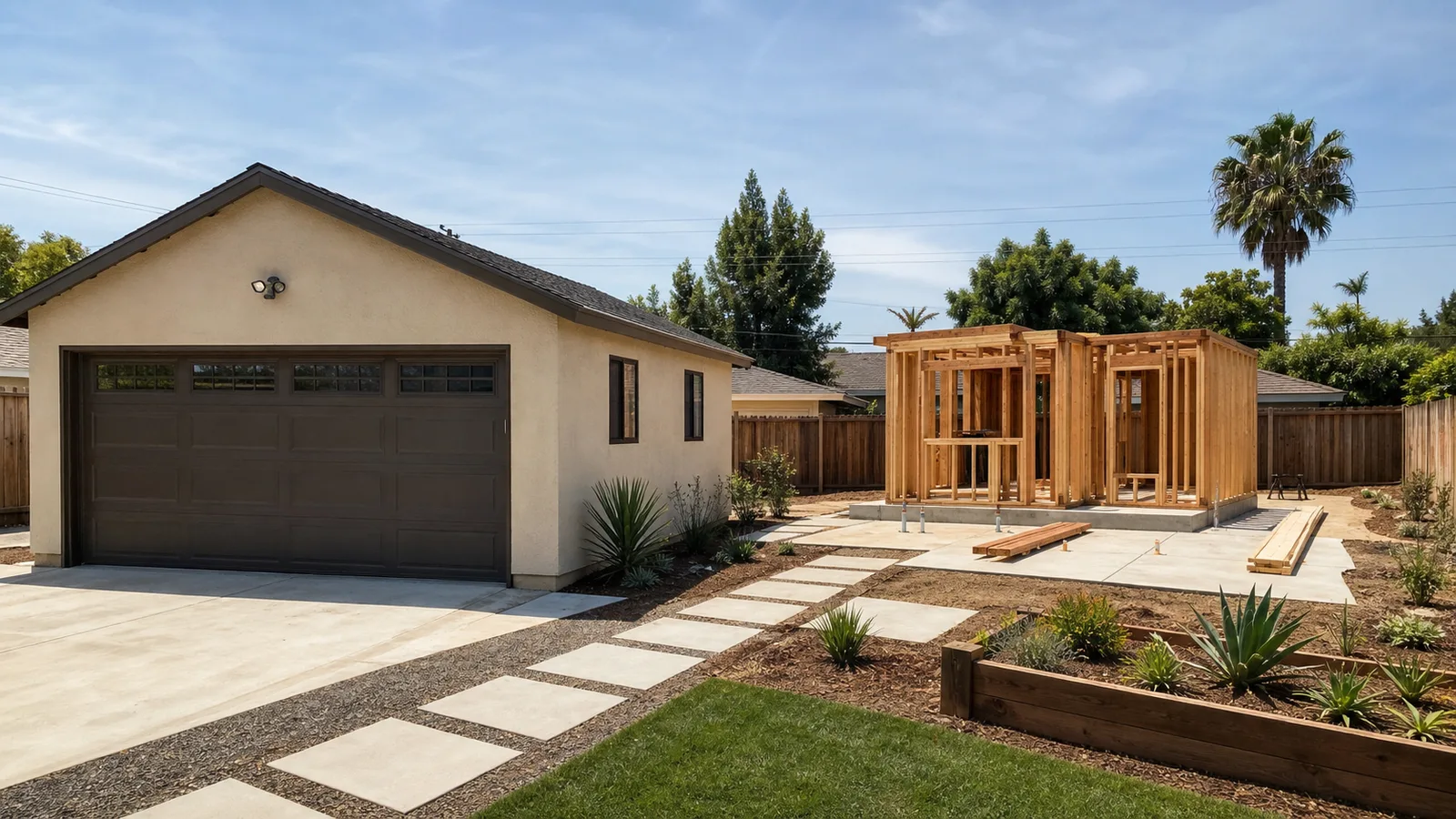
A garage conversion and a detached ADU can both add useful space, but they are not the same project. One starts with an existing structure. The other creates a new living unit or building area with its own site, utility, drainage, privacy, and access questions. The better choice depends on the property, the people who will use the space, the permit path, and the owner goal.
Useful Official Sources
Start With the Use Case
The right answer depends on who will use the space. An aging parent, adult child, renter, guest, home office, studio, or long-term family flex space may all point to different priorities. Privacy, accessibility, storage, bathroom layout, kitchen needs, parking, sound separation, yard impact, and daily access matter as much as square footage.
The conversation should not start with a generic ADU pitch. It should start with the household or property need and then work backward to the buildable scope. For owners comparing options, the Kimmel Elite ADU and garage conversion planning page is the relevant internal service path.
Questions to answer first
- Who will use the space now and who may use it later?
- Does the person need privacy, accessible features, or close connection to the main home?
- Will losing garage storage or parking create a problem?
- Will the yard support a detached unit without hurting daily use?
Garage Conversion Strengths and Limits
A garage conversion can be efficient because the structure already exists, but the existing garage still has to be evaluated. Slab condition, moisture, ceiling height, insulation, windows, doors, fire separation, utility capacity, ventilation, parking, and access can all affect feasibility.
Some garages convert well. Others need enough upgrades that the owner should compare the conversion to an addition or detached ADU before deciding. Existing walls do not automatically mean the project is simple.
Potential advantages
- Existing footprint may reduce site disruption.
- May be useful for family living space, guest space, office space, or rental use if allowed.
- Can preserve more yard area than a detached structure.
Potential challenges
- Existing slab, moisture, ceiling height, insulation, and openings may need upgrades.
- Garage storage and parking may be lost.
- Privacy can be lower if the converted space is close to the main home or driveway.
Detached ADU Strengths and Limits
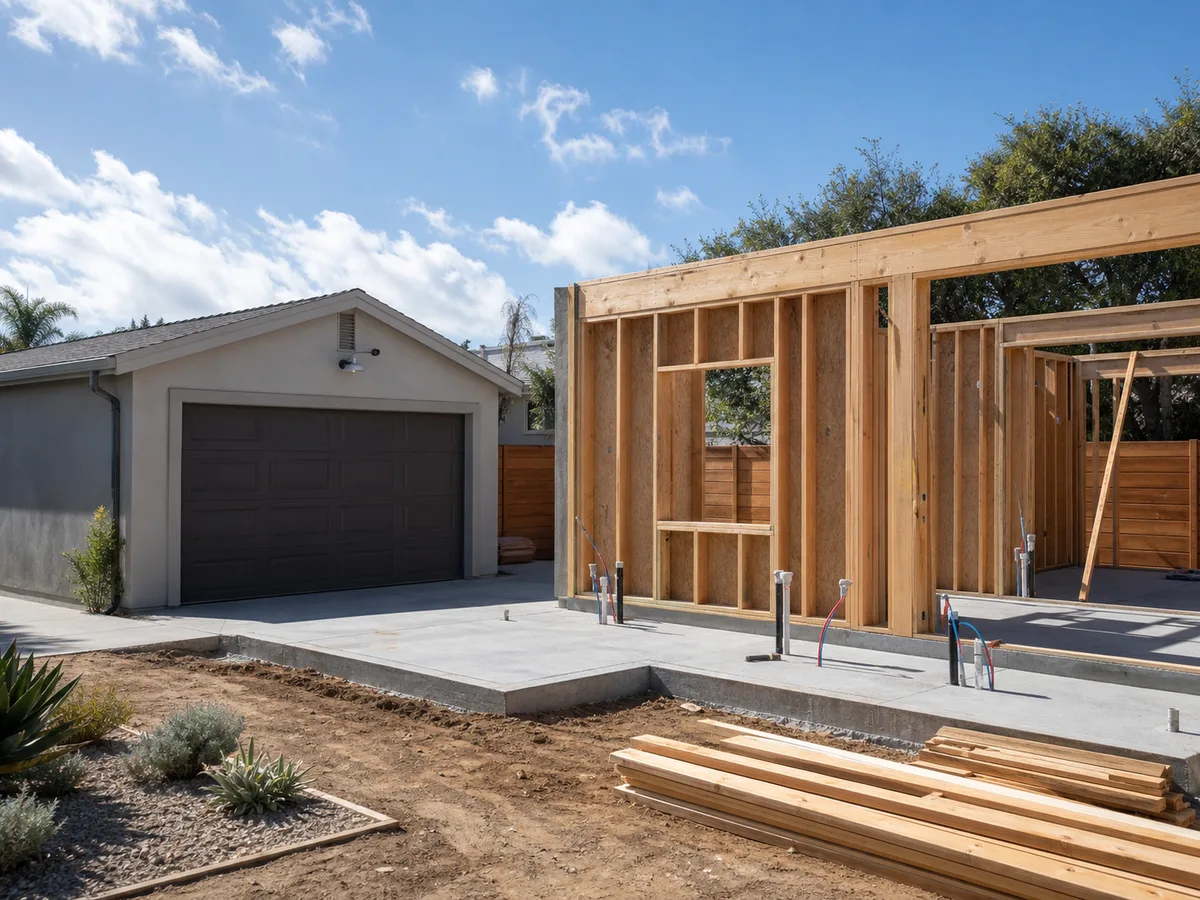
A detached ADU may offer better privacy, layout control, and long-term flexibility, but it also creates more site-planning questions. Setbacks, utilities, drainage, construction staging, access, trenching, foundation, electrical capacity, sewer or septic questions, fire considerations, and cost all need early attention.
Detached work can also affect the yard during construction. For families who use outdoor space daily, that disruption should be part of the plan, not a surprise after work begins.
Potential advantages
- Better privacy and separation from the main home.
- More layout flexibility than a fixed garage footprint.
- Stronger long-term use options for relatives, guests, rental income, or property flexibility.
Potential challenges
- Higher sitework, foundation, utility, drainage, and construction staging complexity.
- More visible yard impact during and after construction.
- Potentially longer planning and permit timeline.
Permits, Utilities, and Comfort Matter More Than the Label
California has expanded ADU opportunities, but local details still matter. Owners should review official ADU resources such as the California HCD ADU Handbook and confirm how the city or county will evaluate the address. Electrical capacity, heating and cooling, plumbing, sewer, water, fire safety, energy requirements, ventilation, and insulation need early coordination.
Comfort is also a construction issue. A converted garage without the right insulation, moisture control, ventilation, heating, cooling, windows, and sound control may technically add space but fail as a place someone wants to live.
What a GC should help organize
- Site and structure observations before drawings go too far.
- Likely permit and inspection triggers.
- Utility and comfort-system questions.
- Coordination with design, engineering, and specialty trades when needed.
San Diego ADU Resources to Review Early
The official resources matter because ADU rules are not only a design question. They affect submittals, setbacks, size, parking, fire access, utility connections, sewer or septic questions, and inspection expectations. City of San Diego owners should review the City of San Diego ADU/JADU permit bulletin and City of San Diego ADU planning information. Unincorporated owners can start with the County of San Diego ADU information.
Those official pages will not tell you whether your existing garage is worth converting, whether the slab is suitable, or whether the yard can absorb construction staging. That is where a field walkthrough matters. A GC can look at access, storage, utilities, drainage, rough structure, and household routines before the owner commits too hard to one path.
What official pages can help clarify
- Whether the property is reviewed by the city or county.
- Basic ADU/JADU eligibility and submittal requirements.
- Parking, access, and site-planning issues to confirm early.
- Whether additional design, engineering, energy, or utility documentation may be needed.
Budget Categories That Owners Often Miss
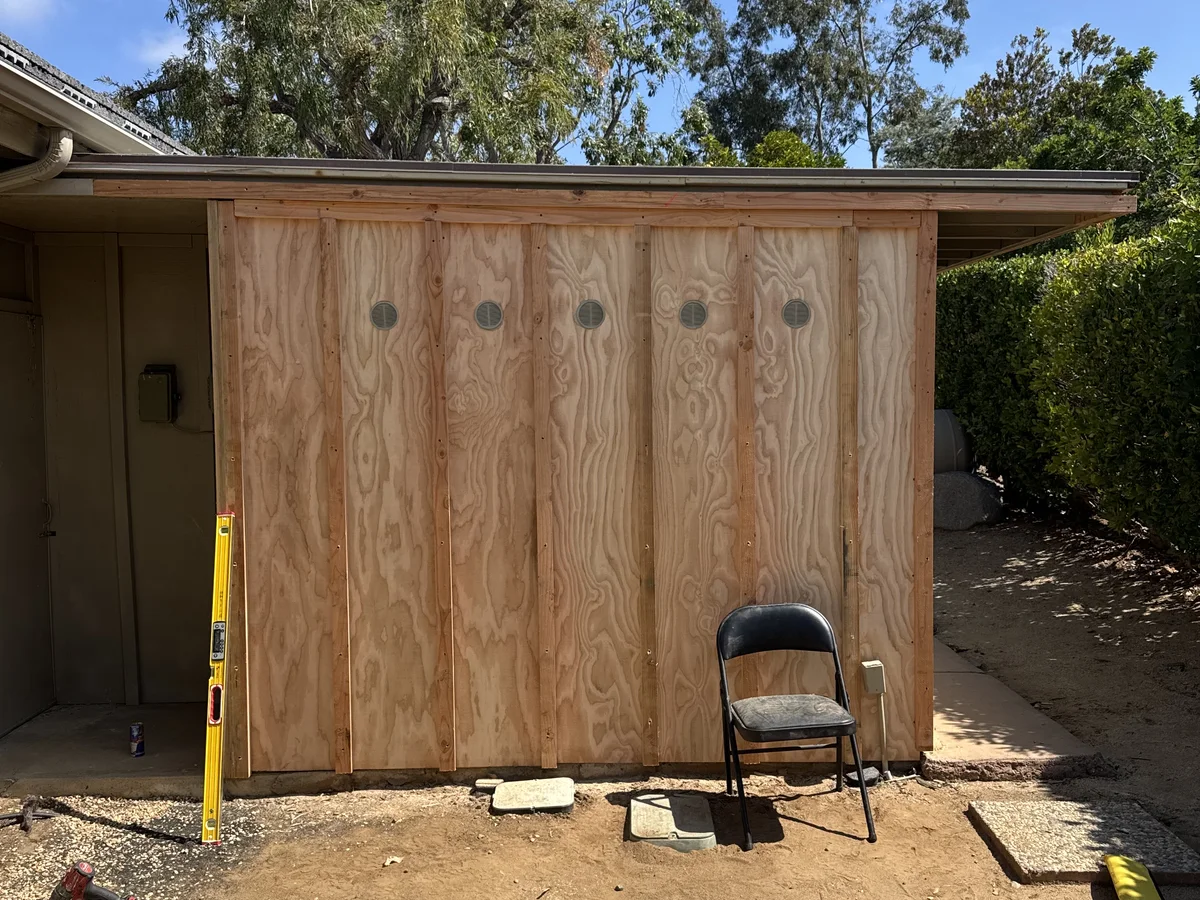
A garage conversion can look cheaper because walls and a roof already exist. But the real budget may include slab work, moisture control, insulation, new windows or doors, fire separation, electrical capacity, HVAC, plumbing, sewer connection, drywall, flooring, lighting, and finish work. If the existing garage was built only for vehicle storage, it may need more upgrades than expected before it feels like livable space.
A detached ADU has a different cost profile. It may require foundation work, framing, roofing, siding, utility trenching, separate metering discussions, drainage, access improvements, and more exterior site disruption. Owners should also think about future maintenance and flexibility. If the ADU may serve aging parents now and a rental use later, the layout, storage, bathroom, lighting, and durable finishes deserve more attention at the beginning.
Related scopes to review
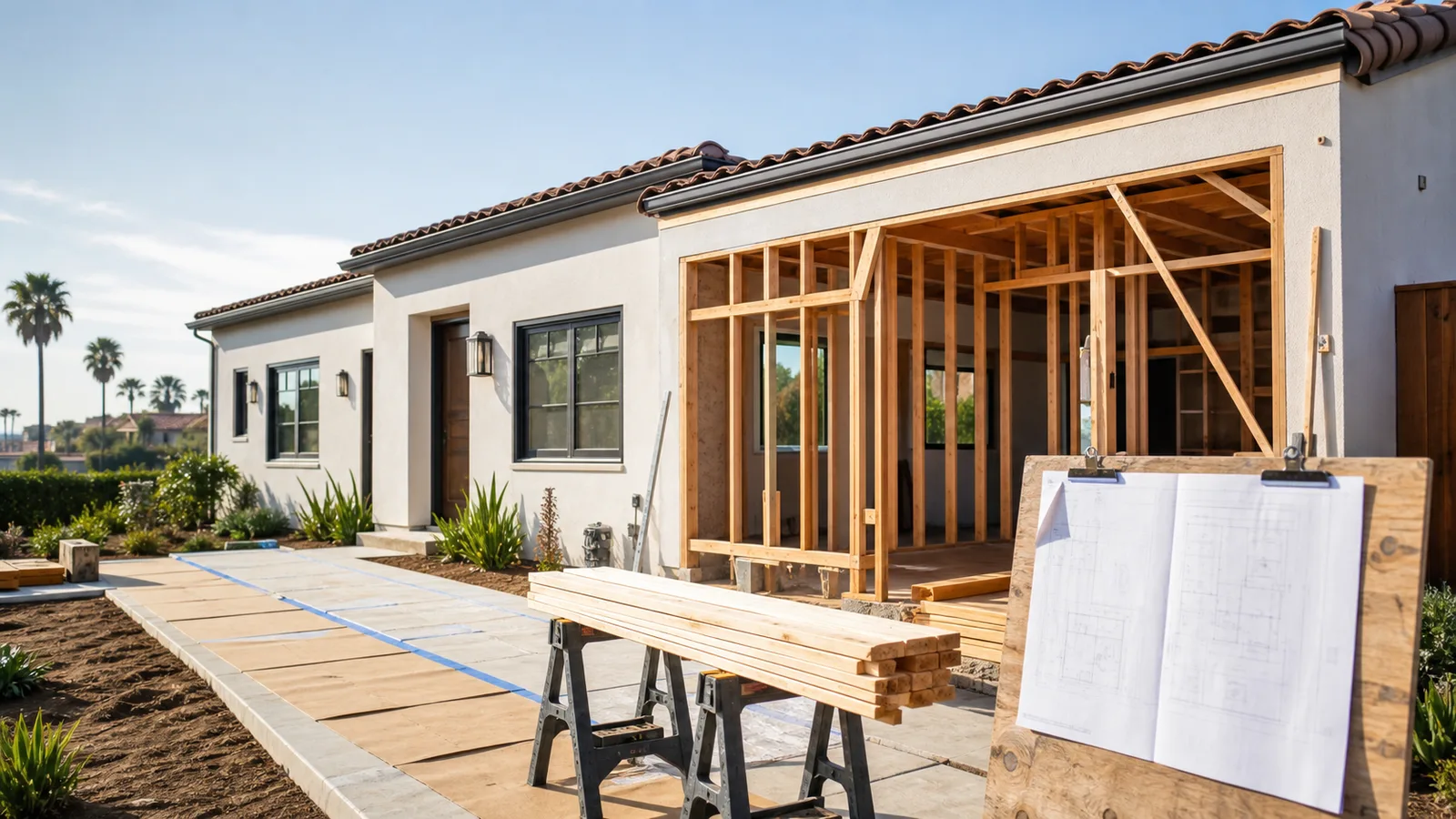
- If the ADU ties into the main home, review home addition planning.
- If the project creates a new detached structure, review custom home construction principles.
- If the work changes electrical, heating, cooling, or ventilation, review electrical and HVAC coordination.
- If the property has slope, drainage, or slab questions, review concrete and foundation work.
Red Flags That Should Slow the Decision Down
For a garage conversion, slow down if the garage has moisture problems, uneven slab conditions, limited ceiling height, poor ventilation, awkward access, or utilities that would need major upgrades. Also think carefully before giving up the only practical storage or parking on the property. A conversion that solves one family problem but creates three daily-use problems may not be the best long-term decision.
For a detached ADU, slow down if access is tight, drainage is unclear, trenching would be difficult, privacy conflicts are obvious, or the yard is too important to lose. The project may still be possible, but the owner should understand the sitework and daily disruption before falling in love with a floor plan. If the property needs more space but an ADU is not the right answer, a home addition or other remodel path may deserve a fair comparison.
Ask before choosing
- What problem does this space solve better than the other option?
- What new problems does it create for parking, storage, privacy, access, or yard use?
- Which utilities are already nearby and which need to be extended?
- What site conditions could affect cost after planning begins?
How to Choose Between the Two
If the goal is a faster, less disruptive use of existing space and the garage is a good candidate, conversion may be worth studying first. If the goal is privacy, rental flexibility, a better layout, or independent living for a relative, a detached ADU may be the stronger long-term answer.
The decision should not be made from a generic cost range alone. It should come from the actual property: structure, utilities, access, parking, drainage, zoning, budget, and family needs.
A good next step is to compare both options on paper before committing to drawings. List what each option solves, what it gives up, what official review applies, and what construction risks are still unknown. From there, a GC walkthrough can focus on the practical constraints instead of trying to sell one option before the property has been studied.
- Choose the path that fits the user, not just the square footage.
- Confirm the jurisdiction and official ADU requirements early.
- Evaluate the existing garage honestly before assuming it is cheaper.
- Compare utility, comfort, privacy, and long-term flexibility.
- Keep a contingency for hidden conditions and design changes.
Common Questions
Is a garage conversion always cheaper than a detached ADU?
Not always. Existing structure can help, but upgrades for comfort, code, utilities, moisture, windows, doors, insulation, and layout can add cost quickly.
Should families design an ADU around current or future use?
Both. The space should solve the immediate need while staying flexible enough for aging parents, adult children, guests, rental use, or future household changes.
Does a San Diego County ADU require official review?
Yes, ADUs and garage conversions should be reviewed through the applicable city or county process. State law creates opportunities, but the local jurisdiction still matters for submittals, inspections, utilities, and site details.
Considering a garage conversion or ADU? Start with a property walkthrough that separates what is possible, what is practical, and what needs official review.
Kimmel Elite Construction keeps the conversation practical: what you want to build, what the property needs, what the city may require, and how the work can be coordinated around the home, tenant space, or commercial property.
Request a Free EstimateRelated Guides
Permits
Do You Need a Permit for a Remodel in San Diego County?
Learn when remodel work is likely to need permit review, why each city can differ, and how early planning protects budget and schedule.
Kitchen Remodeling
Kitchen Remodel Timeline for an Occupied San Diego Home
Understand the phases that shape a kitchen remodel timeline when the family is still living in the home.
Choosing a Contractor
Questions to Ask Before Signing a Contractor Estimate
A plain-language checklist for comparing contractor estimates by license, scope, exclusions, permits, schedule, change orders, payment terms, and closeout documents.