


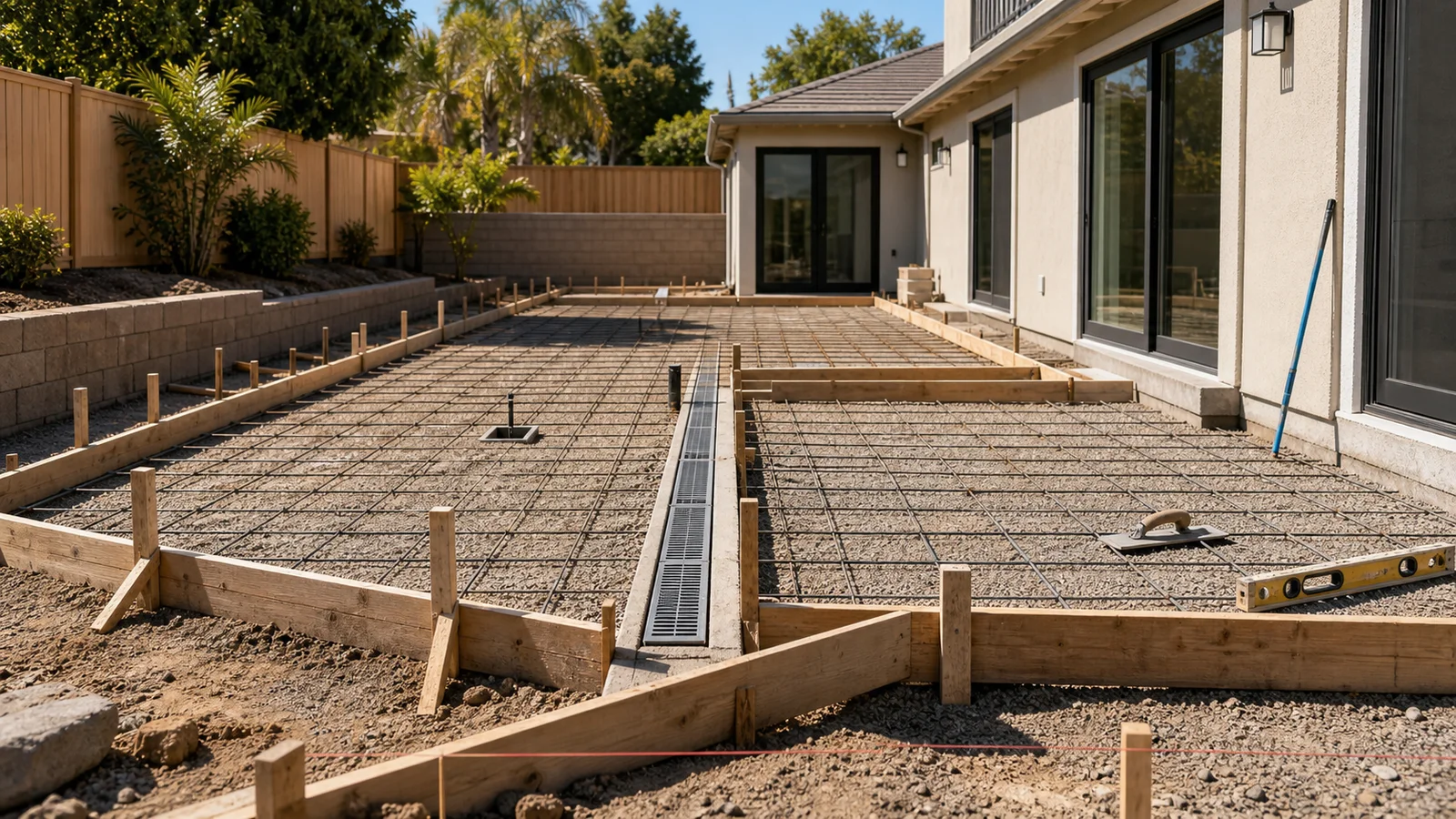
Concrete looks simple after it is finished, but the performance is decided before the pour. Subgrade, forms, reinforcement, slope, drainage, thickness, control joints, access, and cure time all affect whether a patio, driveway, pad, or walkway holds up.
Useful Official Sources
Concrete Starts Below the Surface
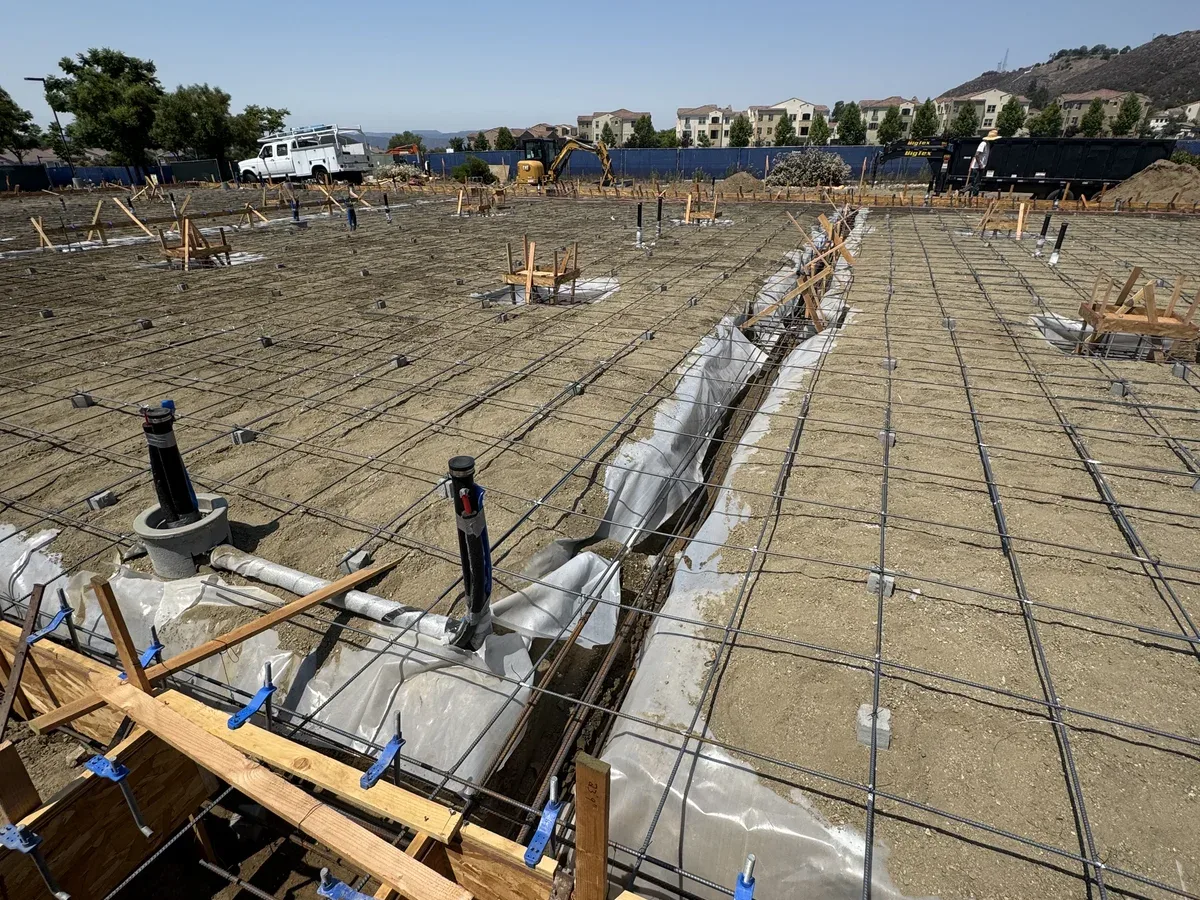
The visible slab is only part of the job. Base prep, compaction, drainage, reinforcement, forms, and site access all affect the final result. Poor prep can lead to cracking, settling, ponding, or edges that fail sooner than expected.
Homeowners should ask how the area will be prepared, how water will move, and how the new concrete will meet existing surfaces.
Drainage Is Not Optional
San Diego may not have constant rain, but when water moves incorrectly it can damage concrete, foundations, stucco, doors, patios, and landscaping. Patios and driveways should not push water toward the house or trap it near thresholds.
Slope, drains, swales, adjacent grades, and downspout paths should be considered before the forms are set.
Control Joints and Cracking
Concrete can crack even when installed well, but planning can control where cracking is more likely to happen. Control joints, slab thickness, reinforcement, base prep, curing, and layout decisions all matter.
The goal is not to promise impossible perfection. The goal is to build with realistic details that match the site and use.
Patios, Driveways, Pads, and Walkways
Each concrete project has a different load and use. A driveway needs to handle vehicles. A patio needs drainage and finish comfort. A pad for equipment or an addition may require different thickness, reinforcement, or inspection steps.
A general contractor can help connect concrete scope to the rest of the project, especially when it supports an addition, deck, garage, ADU, or exterior repair.
Planning Questions
- Where will water go after the concrete is installed?
- What load will the slab carry?
- How will the new work meet existing doors, grades, and walkways?
- Are permits or inspections likely for this scope?
- What access is needed for demo, forms, pour, and cleanup?
Drainage Is Part Of Concrete Scope
Concrete is permanent enough that drainage mistakes become expensive. Patios, driveways, walkways, pads, and flatwork should move water away from structures and avoid trapping moisture at doors, siding, stucco, or foundation edges. Slope, subgrade, compaction, forms, reinforcement, joints, and finish all matter.
San Diego projects can look simple during dry weather and reveal problems during seasonal rain. A GC should look at where water currently goes before proposing a new slab or repair.
Residential And Commercial Use Loads Differ
A backyard patio, a driveway, a dumpster pad, a shop walkway, and a light commercial access path may all be concrete, but they do not have the same use case. Vehicle loads, foot traffic, drainage, trip hazards, accessibility, and business downtime should shape the scope.
The owner should ask what preparation is included. Thin concrete over poor base material may look fine at first and fail early. The hidden base work is often where long-term performance is won or lost.
Concrete Estimate Questions
- What demolition, hauling, base prep, and compaction are included?
- How will slope and drainage be handled?
- What reinforcement and joints are planned?
- How will access, curing time, and business or household use be managed?
- What existing conditions could change the price?
Clarify the concrete patio or driveway Scope Before Pricing
Concrete work is permanent enough that drainage, base prep, and access deserve more attention than the finish color. Before a price can mean much, the owner and contractor need the same definition of the work: where water moves during heavy rain, how vehicles or people use the surface, whether the slab ties into a foundation or structure, what demolition and hauling are required, and how neighboring grades and drains are affected. That scope conversation is what turns a general idea into a buildable plan. It also keeps the estimate from becoming a loose collection of assumptions that are difficult to compare against another bid.
For Kimmel Elite, a useful first walkthrough connects the property goal to the actual construction path. The owner should leave with a clear sense of what can be priced from the walkthrough, what may need drawings or trade input, and what should be confirmed through Vista concrete and exterior service areas. That is true for concrete and foundation work, related repairs, and larger work that touches several building systems.
Use Public Requirements as Planning Inputs
Public rules do not replace contractor judgment, and contractor guidance does not replace the authority having jurisdiction. A practical plan uses both. For this kind of work, useful starting points can include City of San Diego storm water requirements, City of San Diego Building Permit information, and California CSLB license lookup. These references help owners understand why a scope may need permit review, documentation, inspections, energy-code planning, accessibility review, or a more careful sequence than a quick cosmetic project.
The goal is not to make the owner manage the permit process alone. It is to keep the conversation grounded. When an estimate explains which requirements are known, which ones need confirmation, and who is responsible for the next step, the project is easier to schedule and easier to defend if questions come up during review, inspection, financing, insurance, resale, or tenant coordination.
Separate Residential and Commercial Expectations
For a home, a patio, walkway, or driveway should improve daily access, outdoor use, curb appeal, and drainage without pushing water toward the house or creating trip points. The best construction plan recognizes that family life continues during many remodels. Work areas, protection, temporary access, selections, schedule updates, and cleanup all affect how the project feels while it is underway.
For a commercial property, concrete work can affect parking, loading, ADA paths of travel, storefront access, customer safety, delivery timing, and whether the site can remain partially open. Many projects need a licensed GC who can coordinate both residential and commercial scopes, not only a finish installer. The value is practical coordination: knowing which trades are involved, how the work affects occupied space, and where sequencing decisions can reduce unnecessary disruption.
Estimate Details That Prevent Confusion
A stronger estimate for a concrete patio or driveway should spell out demolition, haul-off, base preparation, compaction, forms, reinforcement, thickness, drainage slope, control joints, finish, curing, access, and cleanup. If those items are missing, the owner may be comparing a complete scope against a thin number. That is how a lower bid can become more expensive after construction starts.
Before signing, compare the scope against questions to ask before signing a contractor estimate. If the work has unknowns, also decide how discoveries will be handled through construction change-order planning. Clear estimate language does not eliminate every surprise, but it gives both sides a fair process for deciding what is included, what is excluded, and what requires written approval.
- What exactly is included in the base scope?
- What is excluded or listed as owner responsibility?
- Which allowances can change after selections are made?
- Which hidden conditions are reasonably possible for this property?
- How will photos, pricing, and approval be handled if the scope changes?
Sequence the Work Before the First Day On Site
Good scheduling is not only a start date and an estimated finish date. For this scope, sequencing usually includes layout confirmation, demolition, grade correction, form setting, base prep, reinforcement, pour timing, finish work, curing protection, joint cuts, and final site cleanup. Each step affects the next one, especially when inspections, material lead times, utility shutoffs, tenant access, or occupied-home logistics are involved.
Related planning guides can help owners think through the moving parts before work begins: seasonal property maintenance and exterior repair planning. Reading across those topics is useful because real projects rarely stay in one category. A bathroom may involve electrical and ventilation. Exterior repair may involve drainage. An ADU may involve structure, utilities, energy code, and parking.
A Practical Checklist Before You Approve the Work
Use the checklist below as a final pass before approving the scope. It is not paperwork for its own sake. It is the simplest way to catch vague assumptions while changes are still easy to make, before demolition, ordering, inspections, or business disruption create pressure.
The same checklist works for homeowners, property managers, and commercial owners because the core issue is the same: everyone needs a shared written understanding of the work, the schedule, the risk areas, and the communication process.
- Walk the site during or after rain if drainage is the main concern.
- Ask how slope, drains, joints, and adjacent grades will be handled.
- Confirm slab thickness and reinforcement for the intended use.
- Plan vehicle access, parking, tenant access, or family entry before demo.
- Protect curing concrete from traffic, irrigation, pets, and early use.
When an Owner-Led GC Adds the Most Value
An owner-led, family-owned GC is most useful when the project touches several decisions at once: layout, trades, permits, materials, access, schedule, protection, and budget. That is when a single point of accountability matters. The owner should not have to connect every trade conversation, permit question, product decision, and schedule adjustment alone.
For a project that may involve concrete and foundation work and commercial construction and improvements, the next step is a direct walkthrough and a written scope. Kimmel Elite can help owners decide what belongs in the first phase, what needs more investigation, and what can wait until a later improvement window. Start with a free estimate request when the goal is clear enough to discuss on site.
Common Questions
Is cracking always a sign of bad concrete?
No. Concrete can crack, but proper prep, control joints, reinforcement, thickness, and curing help manage where and how cracks are likely to appear.
Why discuss drainage before a patio or driveway?
Because concrete changes how water moves. Poor drainage can send water toward the home or create ponding that causes bigger problems later.
Planning concrete or seeing drainage problems? Ask for a site-aware walkthrough before pouring.
Kimmel Elite Construction keeps the conversation practical: what you want to build, what the property needs, what the city may require, and how the work can be coordinated around the home, tenant space, or commercial property.
Request a Free EstimateRelated Guides
Additions
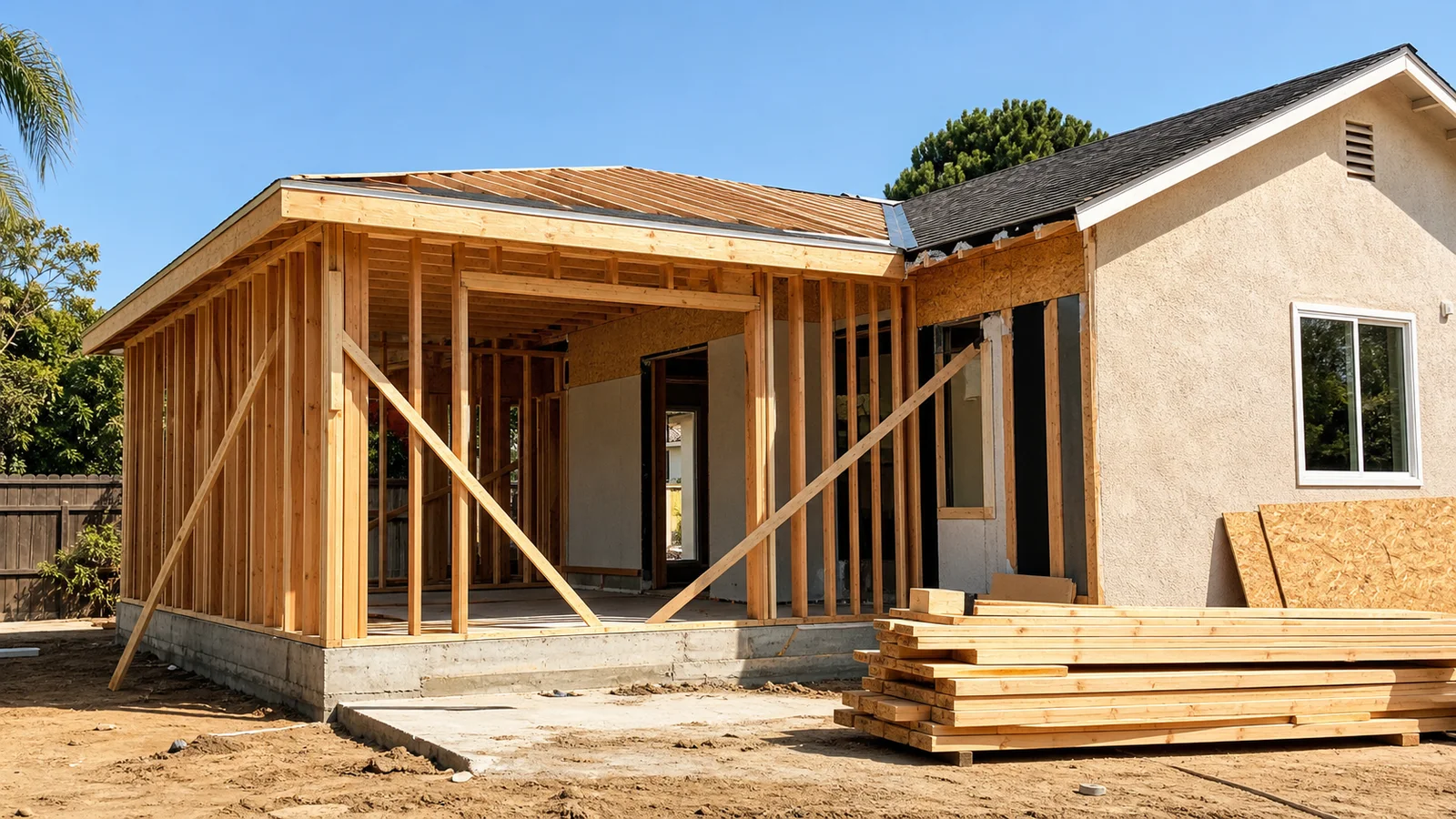
Planning a Home Addition Without Losing the Feel of Your House
Add space without making the house feel patched together. Plan structure, flow, exterior tie-ins, utilities, and family use from the beginning.