


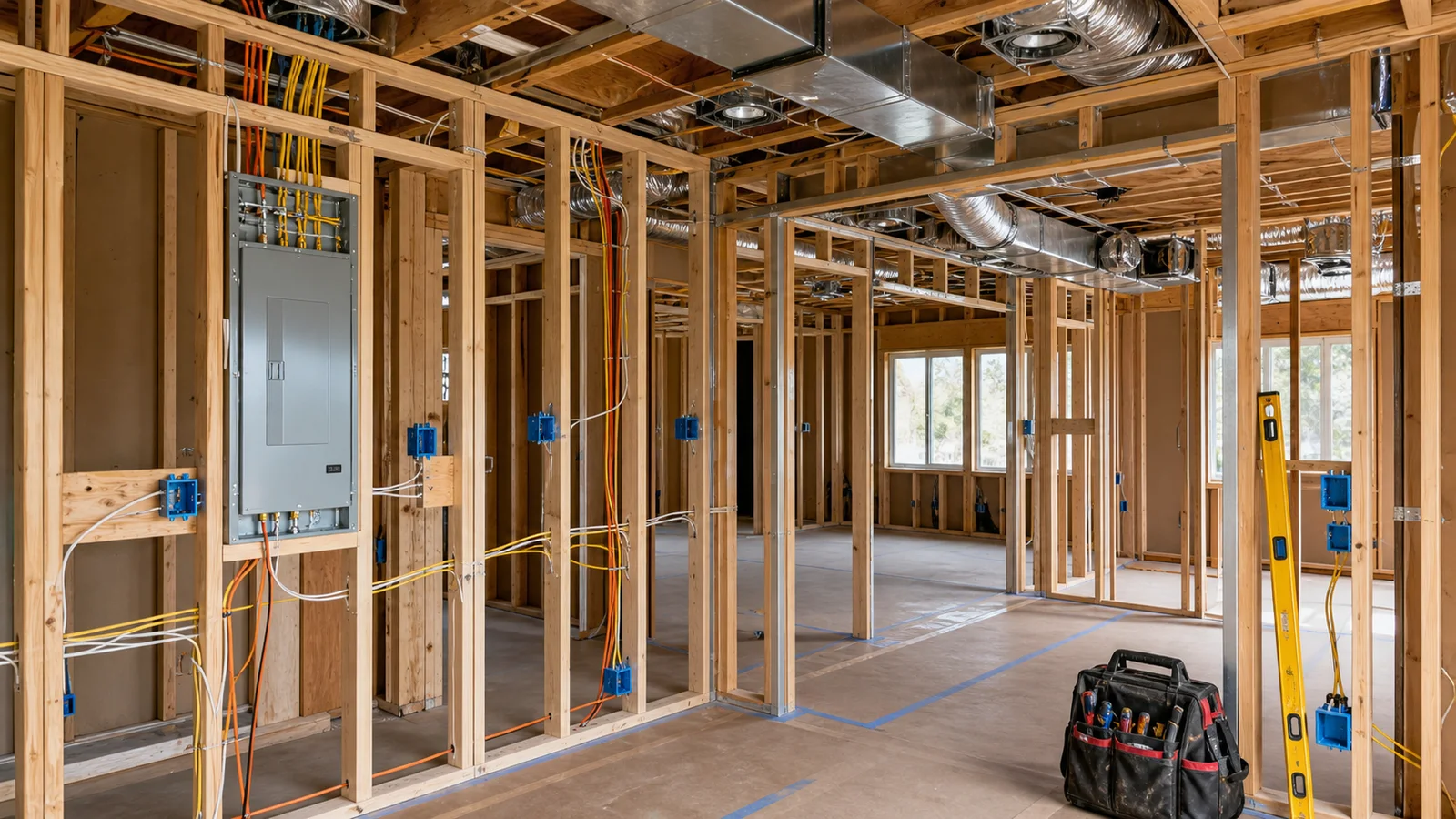
Electrical and HVAC work can be invisible after a remodel is complete, but it shapes how the home feels every day. Lighting, outlets, switches, ventilation, comfort zones, duct paths, panels, fans, and thermostats should be planned before drywall, tile, cabinets, and trim make changes expensive.
Useful Official Sources
Rough-Ins Decide the Finished Experience
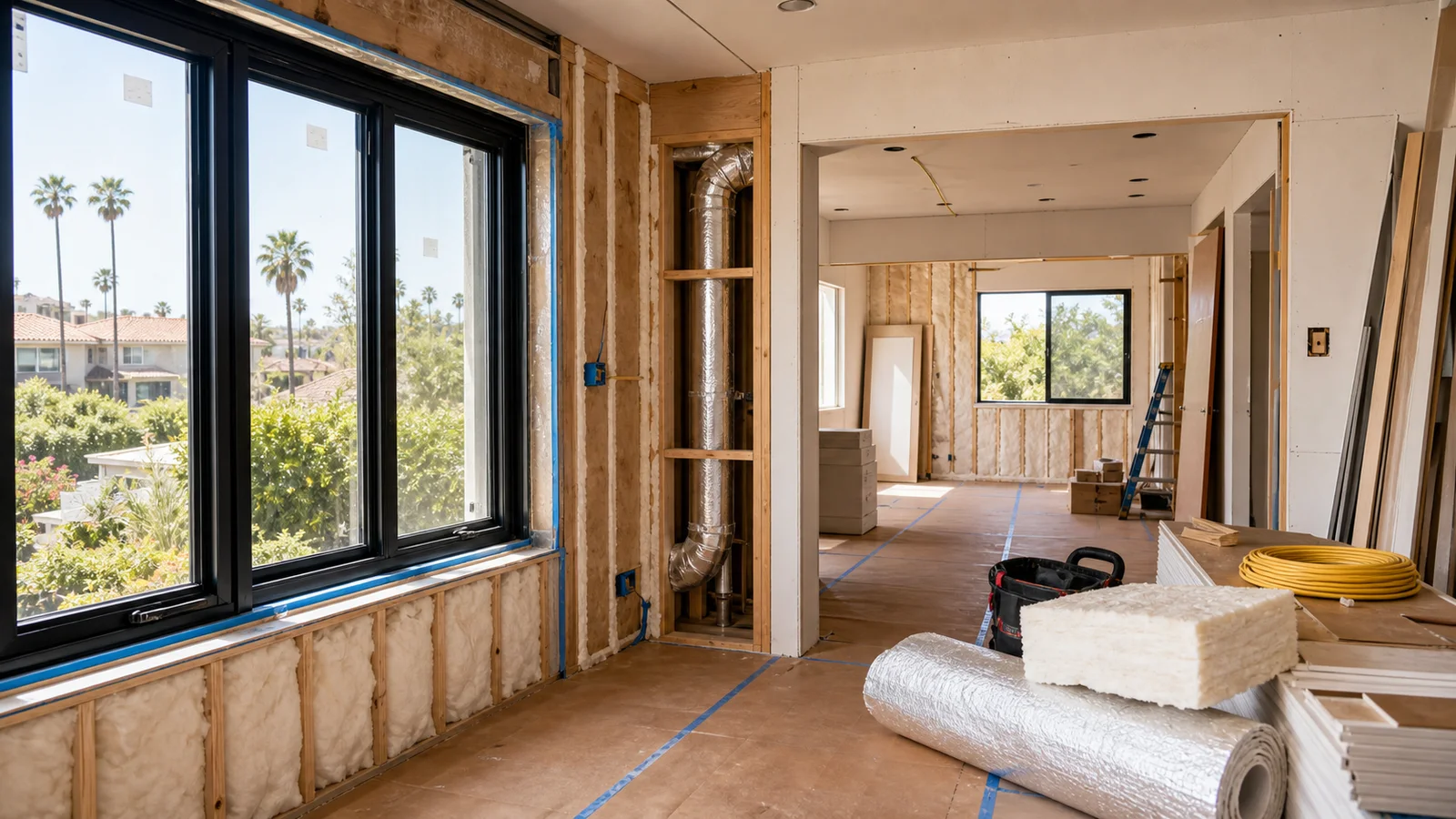
Once walls are open, the project has a short window to place outlets, switches, lighting, fans, ducts, registers, thermostats, and access points correctly. After drywall, tile, cabinets, or counters are installed, moving those items can become expensive.
Good planning walks through how the room will actually be used, not just where the old outlets were.
Kitchens and Bathrooms Need Extra Attention
Kitchens often need appliance circuits, lighting zones, ventilation, island power, GFCI protection, and sometimes panel considerations. Bathrooms need fans, lighting, GFCI outlets, and moisture-aware ventilation.
Because these rooms combine water, power, heat, and daily family use, trade coordination should be discussed before the estimate is treated as complete.
Comfort and Airflow in Additions
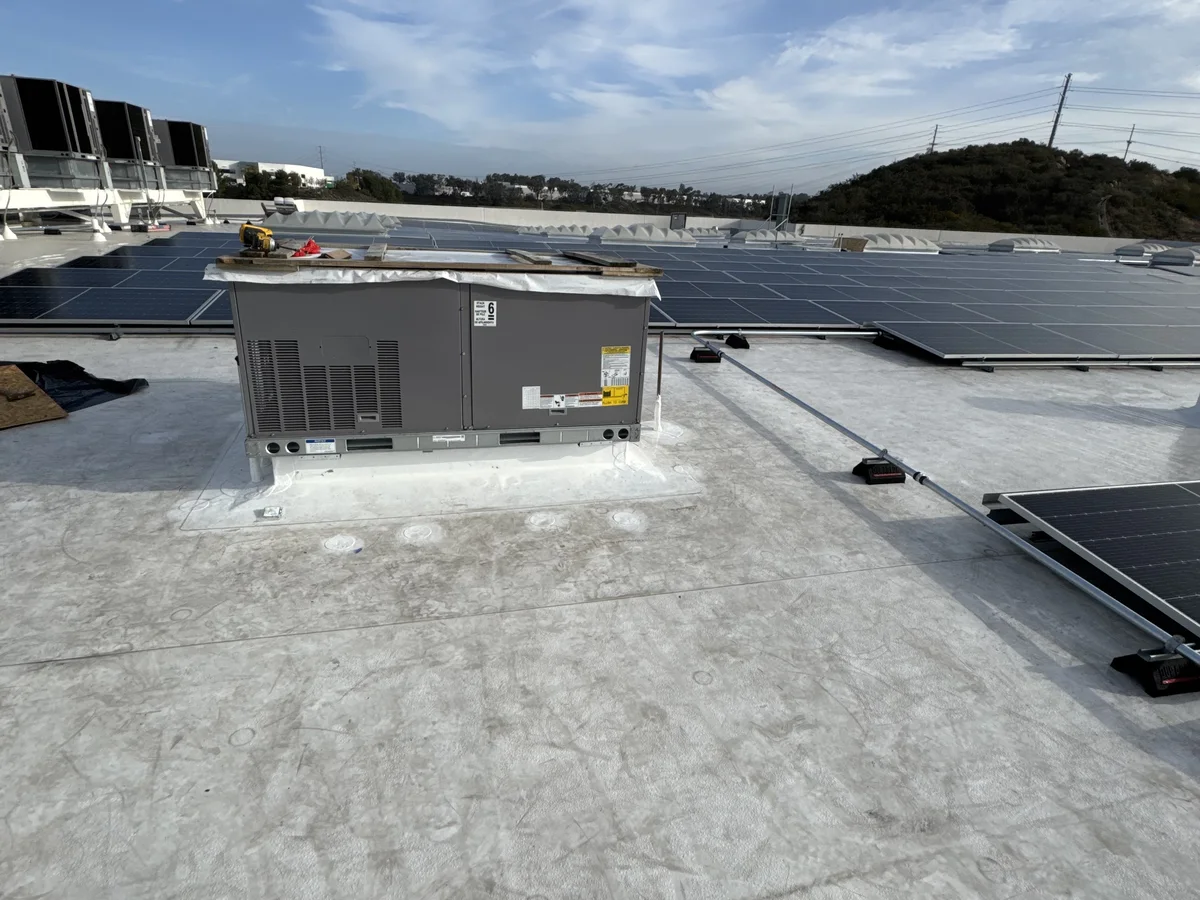
Adding space changes comfort needs. Existing HVAC may or may not support the new square footage or layout. Duct routing, mini-split options, insulation, windows, and energy standards can all shape the plan.
A GC can coordinate the right licensed specialists and keep the remodel sequence aligned so mechanical decisions do not collide with framing or finishes.
Inspections and Licensed Specialists
Electrical and HVAC work may require permits, inspections, and licensed trade involvement depending on the scope. Homeowners should be careful with estimates that gloss over this work or treat it as a vague allowance.
The practical goal is not to overcomplicate the project. It is to avoid opening the same walls twice.
Coordination Checklist
- Lighting layout, switches, outlets, and appliance needs.
- Panel capacity or circuit changes.
- Bathroom fans, kitchen ventilation, and duct paths.
- Thermostat, comfort zones, and register locations.
- Inspection timing before walls close.
Rough-In Coordination Prevents Finish Problems
Electrical and HVAC decisions are easiest to solve before drywall, tile, cabinets, and trim close the walls. Panel capacity, circuit locations, lighting plans, switches, outlets, exhaust fans, duct routes, mini-splits, thermostats, and ventilation all need to fit the layout before the room looks finished.
This is one reason a GC matters on multi-trade remodels. Each trade can be competent on its own and still create conflicts if nobody is coordinating the full room.
Commercial Spaces Add Occupancy And Comfort Questions
Commercial improvements may need to consider employees, customers, equipment loads, restroom ventilation, comfort zones, business hours, and inspection timing. A tenant space that worked for one use may need different electrical or HVAC planning for another use.
The owner should not assume a finish remodel is only cosmetic. If walls move, use changes, equipment changes, or comfort complaints exist, electrical and HVAC coordination should be discussed early.
Before Walls Close
- Confirm outlet, switch, lighting, fan, and thermostat locations.
- Review equipment clearances and access panels.
- Coordinate venting and duct routes with framing and plumbing.
- Confirm permit and inspection assumptions.
- Photograph rough-ins for future reference.
Clarify the electrical and HVAC coordination Scope Before Pricing
Electrical and HVAC coordination is what keeps a remodel from looking finished while performing poorly. Before a price can mean much, the owner and contractor need the same definition of the work: which walls or ceilings are being opened, where appliances, lighting, switches, outlets, vents, and equipment will go, whether the panel or HVAC capacity is adequate, how inspections will be scheduled, and what trade conflicts need to be resolved before drywall. That scope conversation is what turns a general idea into a buildable plan. It also keeps the estimate from becoming a loose collection of assumptions that are difficult to compare against another bid.
For Kimmel Elite, a useful first walkthrough connects the property goal to the actual construction path. The owner should leave with a clear sense of what can be priced from the walkthrough, what may need drawings or trade input, and what should be confirmed through San Marcos and North County service areas. That is true for electrical and HVAC coordination, related repairs, and larger work that touches several building systems.
Use Public Requirements as Planning Inputs
Public rules do not replace contractor judgment, and contractor guidance does not replace the authority having jurisdiction. A practical plan uses both. For this kind of work, useful starting points can include California 2025 Building Energy Efficiency Standards, City of San Diego Building Permit information, and California CSLB license lookup. These references help owners understand why a scope may need permit review, documentation, inspections, energy-code planning, accessibility review, or a more careful sequence than a quick cosmetic project.
The goal is not to make the owner manage the permit process alone. It is to keep the conversation grounded. When an estimate explains which requirements are known, which ones need confirmation, and who is responsible for the next step, the project is easier to schedule and easier to defend if questions come up during review, inspection, financing, insurance, resale, or tenant coordination.
Separate Residential and Commercial Expectations
For a home, coordination affects comfort, safety, noise, lighting, appliance use, family routines, and whether rooms feel right after the finishes are installed. The best construction plan recognizes that family life continues during many remodels. Work areas, protection, temporary access, selections, schedule updates, and cleanup all affect how the project feels while it is underway.
For a commercial space, coordination can affect employee comfort, customer areas, equipment loads, lighting controls, restroom ventilation, inspections, utility shutdowns, and whether work must happen outside business hours. Many projects need a licensed GC who can coordinate both residential and commercial scopes, not only a finish installer. The value is practical coordination: knowing which trades are involved, how the work affects occupied space, and where sequencing decisions can reduce unnecessary disruption.
Estimate Details That Prevent Confusion
A stronger estimate for a electrical and HVAC coordination should spell out rough-in routes, panel or circuit assumptions, lighting layout, switching, GFCI or AFCI needs, duct changes, ventilation, thermostat or equipment coordination, inspections, patching, and finish device installation. If those items are missing, the owner may be comparing a complete scope against a thin number. That is how a lower bid can become more expensive after construction starts.
Before signing, compare the scope against questions to ask before signing a contractor estimate. If the work has unknowns, also decide how discoveries will be handled through construction change-order planning. Clear estimate language does not eliminate every surprise, but it gives both sides a fair process for deciding what is included, what is excluded, and what requires written approval.
- What exactly is included in the base scope?
- What is excluded or listed as owner responsibility?
- Which allowances can change after selections are made?
- Which hidden conditions are reasonably possible for this property?
- How will photos, pricing, and approval be handled if the scope changes?
Sequence the Work Before the First Day On Site
Good scheduling is not only a start date and an estimated finish date. For this scope, sequencing usually includes layout decisions, selective opening, trade walkthrough, rough electrical, rough mechanical, inspection, insulation or air sealing, drywall closure, device trim, startup, and owner walkthrough. Each step affects the next one, especially when inspections, material lead times, utility shutoffs, tenant access, or occupied-home logistics are involved.
Related planning guides can help owners think through the moving parts before work begins: kitchen remodel sequencing and energy-code planning. Reading across those topics is useful because real projects rarely stay in one category. A bathroom may involve electrical and ventilation. Exterior repair may involve drainage. An ADU may involve structure, utilities, energy code, and parking.
A Practical Checklist Before You Approve the Work
Use the checklist below as a final pass before approving the scope. It is not paperwork for its own sake. It is the simplest way to catch vague assumptions while changes are still easy to make, before demolition, ordering, inspections, or business disruption create pressure.
The same checklist works for homeowners, property managers, and commercial owners because the core issue is the same: everyone needs a shared written understanding of the work, the schedule, the risk areas, and the communication process.
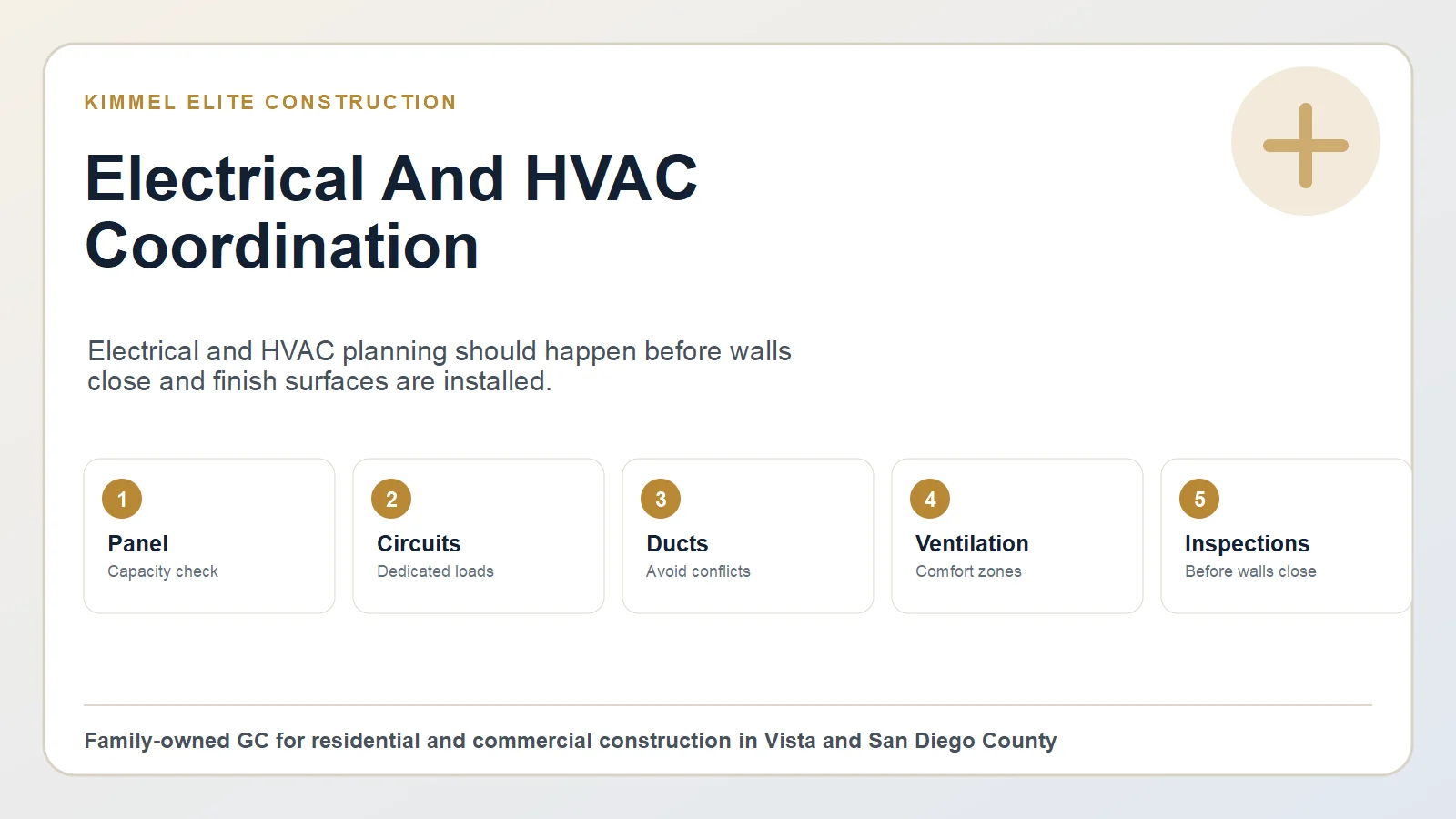
- Finalize appliance, fixture, fan, lighting, and equipment locations before rough-in.
- Ask whether the electrical panel or HVAC system has capacity for the new scope.
- Coordinate vents, recessed lights, beams, cabinets, and ceiling features before drywall.
- Build inspection timing into the schedule.
- Keep finish device locations visible on the plan until the owner approves them.
When an Owner-Led GC Adds the Most Value
An owner-led, family-owned GC is most useful when the project touches several decisions at once: layout, trades, permits, materials, access, schedule, protection, and budget. That is when a single point of accountability matters. The owner should not have to connect every trade conversation, permit question, product decision, and schedule adjustment alone.
For a project that may involve electrical and HVAC coordination and commercial construction and improvements, the next step is a direct walkthrough and a written scope. Kimmel Elite can help owners decide what belongs in the first phase, what needs more investigation, and what can wait until a later improvement window. Start with a free estimate request when the goal is clear enough to discuss on site.
Common Questions
Should electrical layout be decided before cabinets?
Yes. Cabinet locations, appliances, islands, backsplashes, and lighting all affect electrical placement.
Can HVAC be handled after an addition is framed?
It is better to coordinate HVAC during planning and framing so comfort, duct paths, insulation, and finish work do not conflict.
Before opening walls, ask how electrical and HVAC scope should be coordinated with the remodel.
Kimmel Elite Construction keeps the conversation practical: what you want to build, what the property needs, what the city may require, and how the work can be coordinated around the home, tenant space, or commercial property.
Request a Free EstimateRelated Guides
Kitchen Remodeling
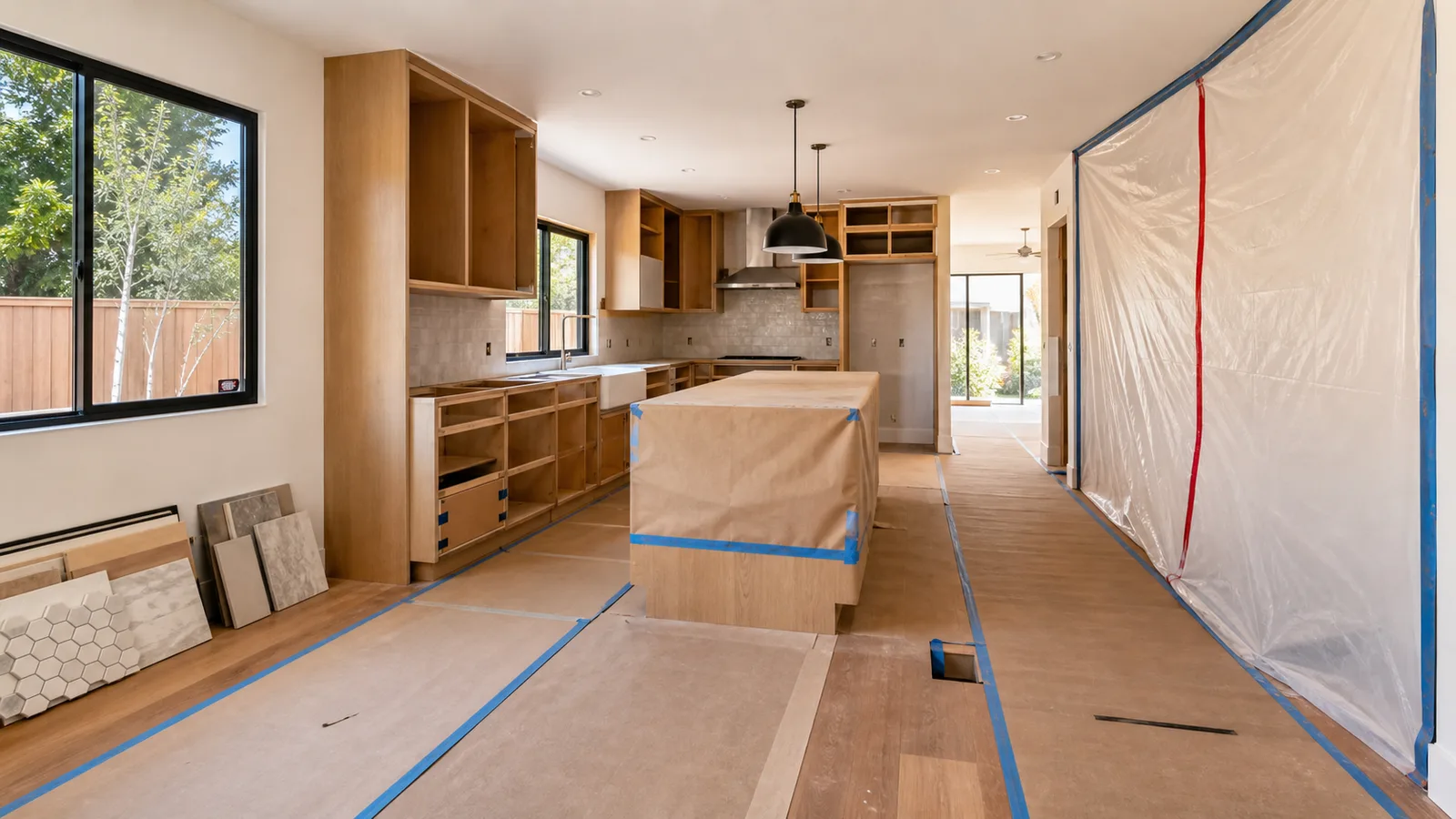
Kitchen Remodel Timeline for an Occupied San Diego Home
Understand the phases that shape a kitchen remodel timeline when the family is still living in the home.
Energy Code
Title 24 and Energy Rules for San Diego Remodels
California energy rules can affect additions, windows, lighting, HVAC, insulation, and other remodel details.